
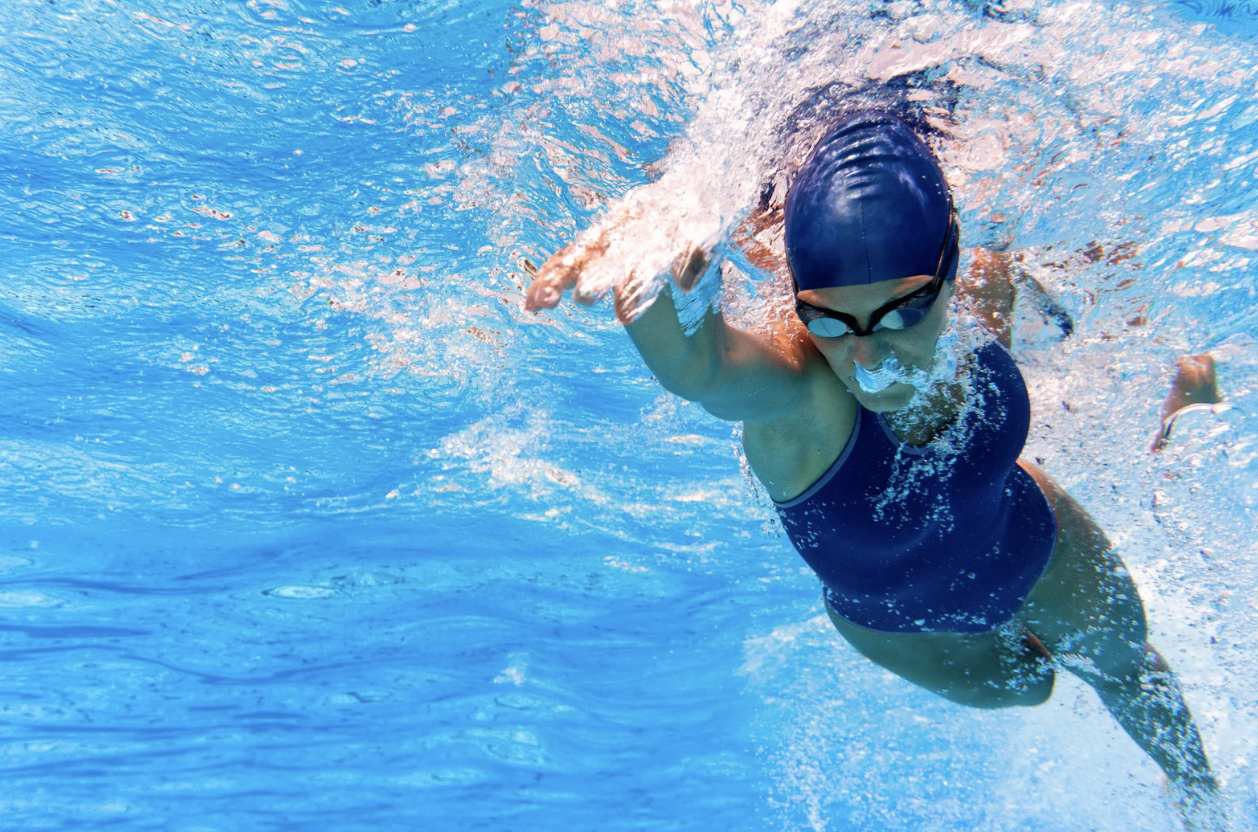
When triathletes think about swim technique, they usually focus on the obvious things. Head position. Elbow height. Hand entry. Kick. Those things matter and are easy for coaches to call out, but they are often peripheral to what is actually limiting progress.
One of the biggest errors I see, even in strong swimmers, is poor timing of hip rotation. It’s subtle, hard to see, and rarely talked about. But the way your hips rotate in relation to your pull is foundational to your stroke. Get the timing right and everything becomes more powerful and efficient. Get it wrong and you’re leaving speed on the table no matter how fit you are.
Why Timing Matters More Than Rotation Itself
Most triathletes know they’re “supposed” to rotate their torso/hips, but they do not know exactly when to do so. In an efficient stroke, hip rotation should begin just before the hand starts pulling backward. NOT after. This timing is critical.
When the hips initiate the rotation and the pull follows immediately after, you couple core rotational power with the arm pull. That sequencing allows the large muscles of the torso (think abs, obliques, lats, erector spinae) to contribute to propulsion, rather than relying almost entirely on the smaller shoulder and arm muscles. When done correctly, you’re swimming from the core. The stroke feels more connected, it’s easier to recruit the lats, and power comes from rotation.
If the timing of your core rotation is off, your stroke becomes disconnected. Power leaks and your pull is less propulsive.
The Consequences of Poor Timing
When hip rotation and the pull are not synced, a few things tend to happen:
Stroke rate increases without speed increasing
Swimmers fatigue early, even at moderate paces
The stroke looks busy (think windmill) but lacks propulsion
This is especially common in triathletes who often have decent fitness but poor swim economy. They are working hard, but the work is not well directed.
The Correct Sequence
Think of the stroke as a chain of events:
The recovering arm enters and extends
As the arm extends, hips begin to rotate toward the pulling side
The hand starts pulling backward right after the hips begin to rotate
Core rotation and the pull happen together
The key point is that hip rotation should lead the pull by a fraction of a second. When this happens correctly, you feel like the pull is being “powered” by the body rather than just the arm. The water feels firmer. The stroke feels smoother. Speed increases without trying harder.
Why This Is Especially Important for Triathletes
Triathletes are not swimming 50-400 yards at max effort like many pure swimmers during competition. They are swimming continuously at a moderately high intensity, and then cycling and running afterward. Efficiency of movement matters more than anything. When timing is correct, you’ll generate more propulsion per stroke, maintain speed with a lower perceived effort, reduce shoulder fatigue, and exit the water fresher and more composed. Cleaning up timing is one of the easiest ways to improve swim performance without increasing swim volume or intensity.
A Simple Cue That Works
Rather than thinking “rotate more,” which is vague and often unhelpful, think “Let the reach start the rotation, then let the rotation start the pull.”
This immediately cleans up timing and gives the stroke a natural, deliberate, effective rhythm.
What to Watch For
Timing issues are tricky because they don’t always show up as obvious technical flaws. From the deck, the stroke can look “fine,” but the feel and what’s going on beneath the water tell a different story.
If your hips stop rotating once the pull begins, your stroke will usually fall apart as intervals get longer. The arms start doing more and more work, stroke rate creeps up, and speed doesn’t follow. Fatigue shows up early, even at paces that should feel controlled.
Other common signs of poor timing include struggling to hold form late in sets, feeling like you’re working hard but going nowhere, or noticing that your stroke looks chaotic without much propulsion.
This is the kind of issue that’s difficult to feel and even harder to see on your own. A trained eye can spot it quickly. Video analysis, in particular, is incredibly valuable for identifying timing issues and helping you reconnect hip rotation to the pull with the right drills and cues. If this resonates, it’s worth reaching out to a coach for in-person or video analysis who can look at your stroke objectively and help you clean it up.
A Drill Progression to Fix Hip–Pull Timing
Below is a great drill progression, variations of which I often use with athletes who need it:
8X50 as 25 position 11, 25 swim.
8X50 as 25 single arm free, 25 swim.
4X50 Snorkel, apply what you just felt
4X50 Front crawl, apply what you just felt
Throughout the drills and the swimming, focus on having your hips rotate directly before and continue rotating throughout the pull. The goal is to feel the pull being driven by the rotation of the body rather than the arm alone, creating a smoother, more powerful, and better-timed stroke. Anchor your arm, rotate, and pull your body past your arm.
Final Thought
When the hips rotate at the right time, the stroke becomes more connected, more powerful, and more efficient. For triathletes, this is low-hanging fruit. It’s subtle, but it’s one of the highest return changes you can make.
Conrad Goeringer is an Ironman Certified Coach based out of Nashville, TN. He is the founder of Working Triathlete and author of the book The Working Triathlete. His passion is helping athletes of all levels and with all schedules achieve their endurance goals. Reach out to learn more about coaching packages and for a free consultation.